

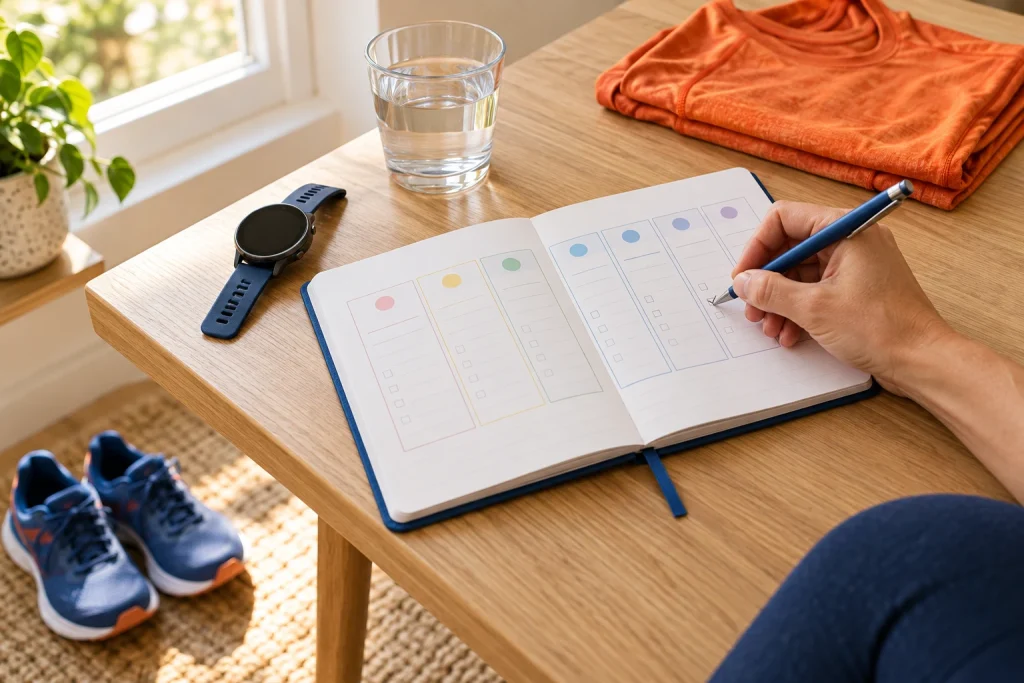
When you want to understand your routine, a sleep note can preserve details that are easy to forget. It might record when you went to bed, when you got up and whether something unusual happened. It does not have to become a nightly scorecard. The useful part is a record you can describe accurately, including what you do not know.
Decide which time you are recording
Time in bed and time asleep are not the same measurement. If you know when you put the light out and when you got up, label those times accordingly. Do not turn the interval into an exact sleep duration unless you have a basis for doing so. An estimate can still be useful when it is identified as an estimate.
A wearable may report its own sleep estimate. Keep the device and measurement source consistent if you compare entries, and remember that a number on a screen is not a clinical assessment. Copying a device value into another app does not make it more certain. Preserve the original context rather than presenting the number as an unquestionable fact.
Use a small set of fields
Choose the fields that answer your actual question. You might want to remember your bedtime routine, a changing work schedule or a disturbance during the night. A brief note such as “late train home” or “stayed with family” can explain the circumstances without requiring a detailed diary of the entire day.
Avoid adding every possible measurement at once. More fields create more opportunities to abandon the record or fill gaps with guesses. If you miss an entry, leave it blank. A missing value is different from zero hours and should not pull down an average as if it were a recorded sleepless night.
Write observations before interpretations
“I woke several times” is an observation. “This food caused my sleep problem” is an explanation that a diary alone cannot establish. Keep the distinction visible. Several factors can change together, and a short personal record cannot isolate them as a controlled study would.
If a concern persists or affects your daily life, discuss it with a healthcare professional. The notes can help you describe timing and circumstances. They should not be used to diagnose a sleep disorder, choose medication or decide that a worrying symptom is harmless. An organizational journal has a smaller, useful job: remembering what you entered.
Review a period rather than judging one night
When you look back, begin by checking completeness. How many days have actual entries? Were the measurements recorded in the same way? Did work or travel change? These questions prevent a tidy chart from suggesting more consistency than the source data supports.
You may notice a routine you want to discuss or a logistical change you want to try, such as preparing the following morning’s bag earlier. Keep that experiment modest and describe what changed. Do not treat a better or worse night as proof of a cause. Your record is a conversation with your own experience, not a verdict.
Keep the information under your control
The Routine & Recovery Journal stores projects in this browser and account. Export a backup if you want to retain the record when changing devices or cleaning browser storage. Choose carefully before sharing personal notes, and remove details that are irrelevant to the conversation. A concise, honest record is easier to use than a large collection of uncertain numbers.
Open Routine Journal to organise your own inputs and keep an editable project.