

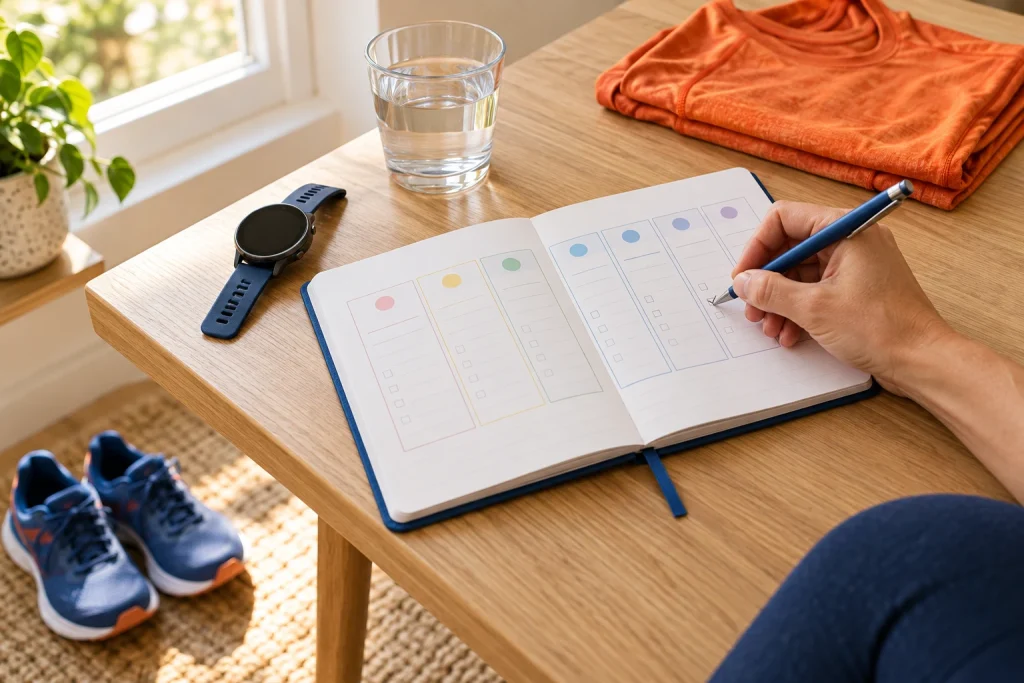
A rest day can become surprisingly busy when every suggestion is treated as another task to complete. There is a product to try, a metric to record and a routine to perfect. You do not need to fill the space that way. Begin with the reason the day is unassigned and the things that would make ordinary life more comfortable.
Leave the training decision where it belongs
If you follow a program from a qualified professional, keep its rest and recovery instructions intact. A diary can help you remember them, but it cannot determine whether you have recovered or whether you should train. If pain, illness or a health concern changes the situation, seek advice suited to that concern rather than interpreting a streak or a readiness number as an answer.
For everyday organization, it is enough to label the day honestly. “Rest,” “not scheduled” and “plans changed” can mean different things. You may want to distinguish them in your notes, but none needs to carry a judgment about your character. A calendar is more useful when it reflects what happened.
Take care of one recurring inconvenience
Look at the small jobs that make your activity days harder. Perhaps the bag contains a damp towel, the water bottle is missing its lid or the instructions you need are buried in a message. Choose one job that is worth doing today. Stop when it is done rather than expanding it into a complete overhaul of your routine.
For example, Morgan uses a free evening to wash and dry the items that normally stay in a gym bag. They put the entry pass back in its pocket and leave the bag ready. The task has a visible end. It supports a future visit without pretending to be a recovery treatment or another workout.
Keep observations separate from explanations
You can note that you slept poorly, felt unusually tired or had a busy day without deciding what caused it. A few days of diary entries do not prove a medical explanation. If a pattern concerns you, the notes may help you describe it to an appropriate professional, but the app should not diagnose it for you.
Only record information you expect to use. If entering a number makes you scrutinize every ordinary fluctuation, a short sentence may be a better format. Optional fields can stay empty. Missing data should remain missing rather than being converted into a low score or a reason to compensate later.
Make room for enjoyable ordinary things
A day without a planned session can hold social time, a hobby or nothing especially productive. You do not need to justify those choices by estimating calories or attaching a fitness benefit. If you choose an activity, choose it because it fits your circumstances and what you want from the day, not because an app refuses to display an empty square.
Try ending the day with one observation worth keeping. “Packing the bag earlier helped” is enough. “I enjoyed having the evening free” is also enough. The Routine & Recovery Journal can store those notes alongside your own optional measurements, while leaving interpretation with you. A useful record supports your life; it does not require every day to demonstrate improvement.
Open Routine Journal to organise your own inputs and keep an editable project.