

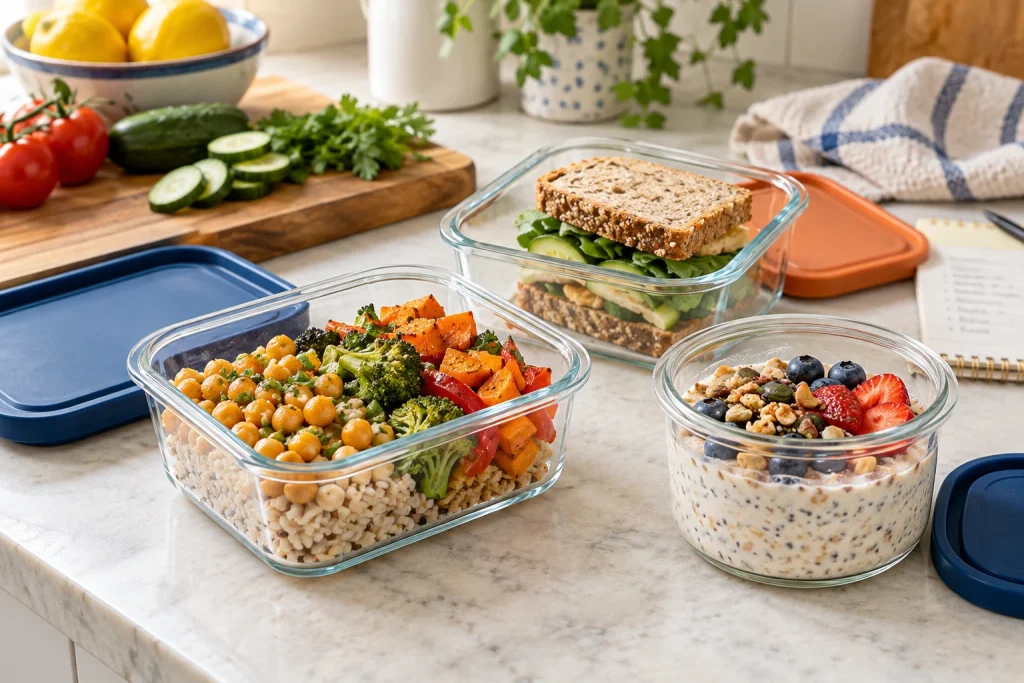
Meal preparation can start with three lunches, a shelf in the fridge and a shopping list that matches them. You do not need a full week of identical containers or a new eating identity. Begin with meals you already enjoy and can prepare with the time, equipment and storage you have. This is a plan for getting food ready, not a personalized diet.
Choose the meals and the people
Write down which lunches you want to cover and how many people will eat each one. A recipe serving count is a planning input, not a rule about how much someone must eat. Adjust the food to individual needs, preferences and any professional dietary advice that applies. If allergies are involved, inspect the actual ingredient labels and preparation environment.
Pick meals with some shared ingredients but enough variety that you will want to eat them. For example, cooked chickpeas could appear in a grain bowl and a wrap, while cucumber is used in both. The shared ingredient reduces shopping complexity. It does not require the two lunches to taste or look the same.
Check the storage plan before the shopping list
Decide which food will be prepared ahead, which will be assembled on the day and which might be frozen. Consult current food-safety guidance for the actual ingredients and dishes. FoodSafety.gov lists different refrigerated storage periods for different foods; a single “meal prep week” label cannot safely replace those distinctions.
The published chart gives three to four days for many cooked leftovers when refrigerated appropriately. That is a limit for those listed foods, not a reason to store every prepared ingredient for the same length of time. Follow food-specific guidance, keep the fridge at the recommended temperature and label containers so you know what was prepared when.
Count what you already have
Look in the cupboard, fridge and freezer before adding groceries. Record usable quantities in a compatible unit. If a plan needs two hundred grams of oats and you have one hundred grams, the shopping requirement is one hundred grams. A half-full packet with an unknown weight is an estimate; either measure it or leave some room in the shopping decision.
Keep dry and cooked quantities distinct. One cup of dry rice is not interchangeable with one cup of cooked rice. In the Meal Prep & Grocery Board, ingredient names and compatible units determine what combines. Review the generated list instead of assuming differently named or prepared ingredients are identical.
Prepare in a sensible order
Read each recipe or assembly card before beginning. Gather containers and check that their lids fit. Keep raw and ready-to-eat foods separate and follow appropriate cooking, cooling and storage guidance. The app’s assembly cards use cooked or ready-to-eat ingredients; they do not replace cooking instructions for raw meat, eggs or other ingredients that need them.
Leave finishing touches separate when that suits the meal. A dressing, crisp topping or bread component may be more appealing added later. This is a taste and texture choice, and it also helps you understand what still needs doing on the day.
Review the lunches you actually ate
After the three lunches, note what was enjoyable, what remained unused and whether preparation took the time you expected. Adjust the next shopping list using those observations. Keep a meal because it works for your household, not because its container photographs well. A modest plan that gets used is a strong foundation for a larger one.
Open Meal Prep to organise your own inputs and keep an editable project.