
4 OPTIONS · COMPARE THE DETAILS
A quick look before you choose
Compare FlipBelt for a no-buckle tube, SPIbelt for one adjustable pouch, Nathan for several pockets and Amphipod for a compact pouch with a divider. Fit and access need your actual items.
Jump to the comparisonThe short version
Match the equipment to your day
Compare FlipBelt for a no-buckle tube, SPIbelt for one adjustable pouch, Nathan for several pockets and Amphipod for a compact pouch with a divider. Fit and access need your actual items.
A good fit if…
Readers choosing equipment around an existing routine, actual space and carrying needs.
Look elsewhere if…
You need a measured performance ranking or an individual exercise recommendation.
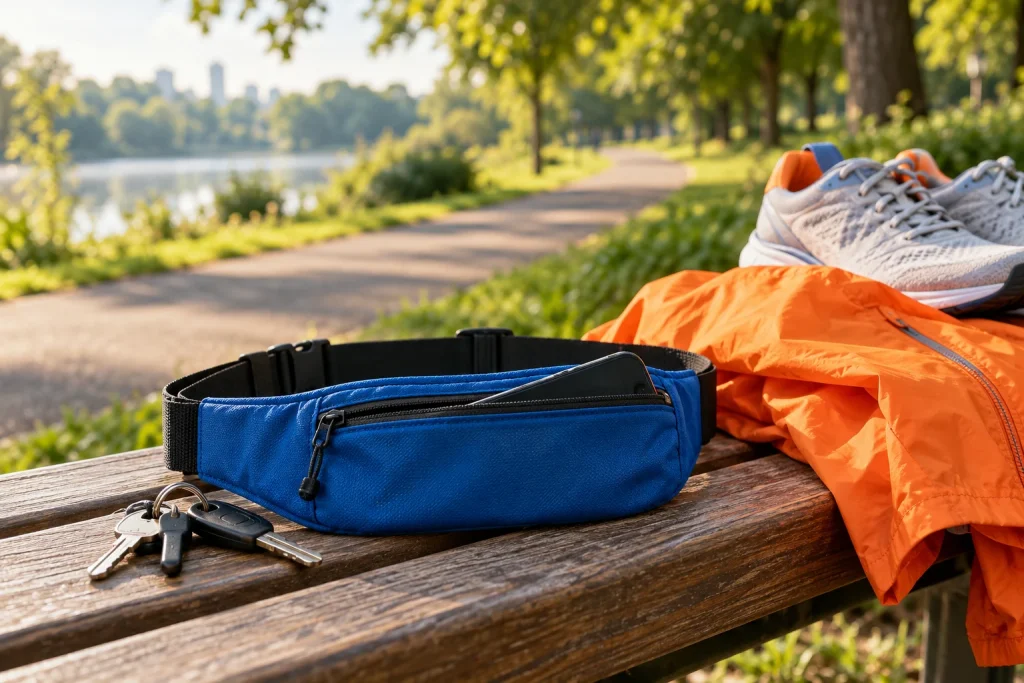
Start with the phone, case and small essentials you really carry. These four belts organize that load differently, from a pull-on tube to adjustable pouches and separated pockets.
Lay out the contents first
Place your phone in its case beside the keys, cards and other items you need. This small exercise is more useful than searching for the belt with the largest capacity claim. Decide whether keys need their own space and which item you retrieve most often. A belt should carry the load conveniently, not merely contain it somehow.
Choose between pull-on sizing and adjustment
FlipBelt Classic uses a continuous no-buckle form. SPIbelt and the Amphipod option use adjustable buckle arrangements. Nathan’s stretch-mesh design has its own sizing requirements. Measure where you intend to wear the belt and consult the current guide. Clothing layers and the loaded pouch can change the experience compared with an empty product photo.
Pocket opening matters as well as internal size
A phone may fit inside a compartment yet be awkward to pass through the opening, particularly with a bulky case. Nathan specifies medium-sized phones and publishes pocket dimensions. Compare those with the actual device. Avoid assuming the phrase “fits smartphones” covers every model and case combination.
Use protection claims precisely
Weather resistance is not waterproofing, and a zip is not proof of a watertight enclosure. Protect electronics appropriately for the conditions and follow the maker’s guidance. We have not run bounce, retention or weather tests. This comparison evaluates documented organization and fit questions, not an invented comfort score.
Try the complete arrangement before a long outing
When possible, inspect the belt with the actual load and the clothes you normally use. Check access while stationary, then follow the product instructions for use. If you need bottles or a larger load, investigate the appropriate compatible system rather than assuming any bottle will fit. Keep the solution as small as your real requirements allow.
Explore each product
Amphipod AirFlow MicroStretch Belt review
Strengths
- Different forms and ownership requirements compared in one place.
- Manufacturer sources and individual guides are linked.
Limitations
- This is a research comparison, not a hands-on test.
- Variants, availability and instructions can change.
The details, side by side
Compare the format, setup and purchase checks that matter for your routine.
Swipe or scroll sideways to compare all products →
| What matters to you | FlipBelt ClassicPull-on tube | The Original SPIbeltAdjustable single pouch | Nathan Zipster LiteFour-pocket organization | Amphipod AirFlow MicroStretch BeltCompact divided pouch |
|---|---|---|---|---|
| A good fit for | Someone who prefers a continuous belt and can choose a size using the current fit guide. | Someone carrying a small set of essentials who wants an adjustable belt rather than a pull-on tube. | Someone who wants to separate small essentials across several pockets and can match the size guide. | Someone wanting a small adjustable carrying system with a divider inside the main pouch. |
| Product format | A pull-on tubular belt with several pocket openings and no buckle, designed to sit around the hips. | A buckle belt with an expandable zippered pouch; the current standard listing gives a 25–38-inch waist range. | A stretch-mesh belt with four pockets, including two zippered weather-resistant pockets; the maker specifies medium-sized smartphone fit. | A minimalist adjustable belt with a buckle, a mesh compartment and an internal divider in its expandable zippered pouch. |
| Before you buy | Measure for the maker’s size guide and check your phone, case, keys and any separately purchased compatible bottle. | Check the current waist range, pouch dimensions and actual phone-with-case size; inspect extender or alternative size options if needed. | Check belt size and the listed pocket opening against the device and case you carry, then inspect closure access. | Check SKU 230, the pouch and fit details, and how your actual items sit around the internal divider. |
| The trade-off | A pull-on design makes size selection especially important. Do not treat a pocket opening as a waterproof enclosure. | Phone fit depends on the case and other contents. A manufacturer bounce claim is not a measured result in this guide. | Weather-resistant does not mean waterproof. Large phones and bulky cases need a dimension check. | Minimal carrying capacity is the point. Do not assume the pouch suits a large load or protects electronics from water. |
| Take a closer look |