
4 OPTIONS · COMPARE THE DETAILS
A quick look before you choose
Use an open container when flexibility matters, a divided layout when it matches your regular lunch, and lightweight trays when carrying several meals is the priority. Compare complete containers rather than piece counts.
Jump to the comparisonThe short version
Match the equipment to your day
Use an open container when flexibility matters, a divided layout when it matches your regular lunch, and lightweight trays when carrying several meals is the priority. Compare complete containers rather than piece counts.
A good fit if…
Readers choosing equipment around an existing routine, actual space and carrying needs.
Look elsewhere if…
You need a measured performance ranking or an individual exercise recommendation.
Choose around the meals you pack and the journey they make. An open glass box, a divided glass lunch container and a lightweight tray set are different answers to everyday food storage.
Draw the lunch before choosing the box
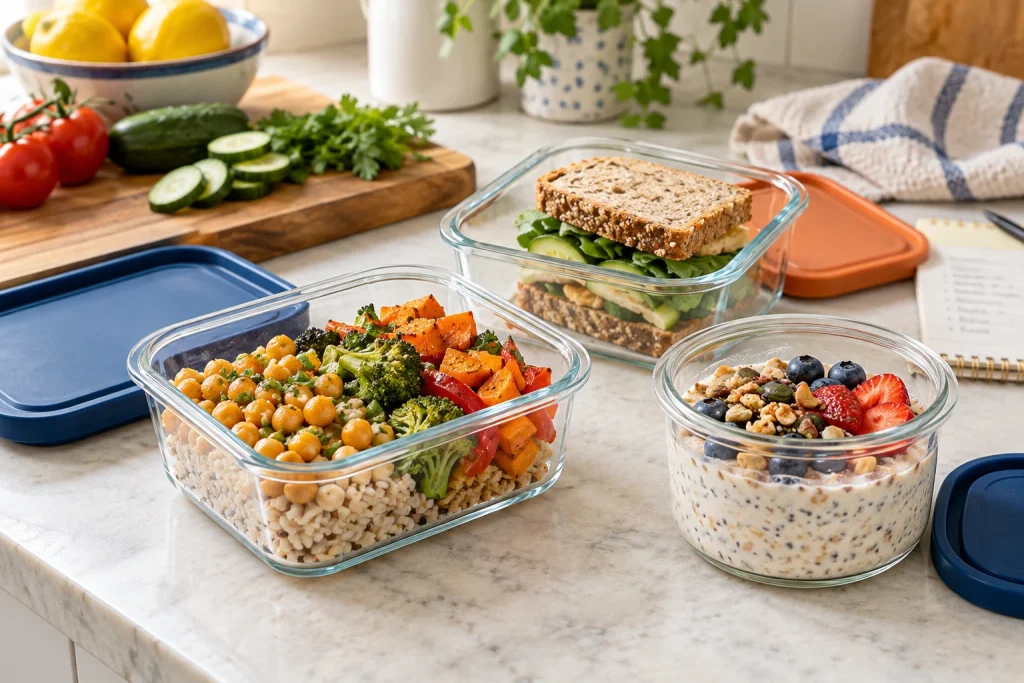
Think about a meal you actually pack. Do you want a main dish and a side separated, or room to arrange food freely? Rubbermaid Brilliance and the Pyrex rectangle provide open interiors. Snapware MealBox has two sections, while Bentgo Prep has three. A divider is useful when the layout matches your food; otherwise it can make an apparently large container awkward.
A set count is not a meal count
Bentgo’s twenty-piece set contains ten trays and ten lids. Compare that with the number of complete containers you need. Also consider where they will live when empty. Buying more containers does not solve uncertainty about the meals or storage space, and filling a large set is not a reason to keep food longer than food-specific guidance allows.
Separate the body from the lid
Heating and cleaning permissions can differ between the container and its lid. Rubbermaid documents separate glass-base and lid instructions, and Bentgo instructs users to remove lids for microwaving. Read the exact product’s current care guidance. Do not infer oven use, liquid sealing or safe heating from the word “meal prep.”
Carrying weight and replacement change value
Glass may suit a home storage and reheating routine but adds weight to a bag. Lightweight trays can be easier to carry in quantity, while their reuse guidance affects longer-term value. Inspect Bentgo’s current limited-reuse statement rather than treating “reusable” as unlimited durability. We have not drop-tested containers or measured seals.
Check food safety outside the product comparison
A container does not determine a safe storage period for every food. Use current guidance for the ingredients and dish, label preparation dates and follow appropriate handling. The shortlist helps organize food; it does not prescribe portions or create a nutrition plan. Confirm the exact model and lid inclusion before ordering, particularly where replacement parts are sold separately.
Explore each product
Rubbermaid Brilliance Glass 4.7-cup review
Snapware MealBox 4-cup Divided Glass review
Pyrex Simply Store 6-cup Rectangle review
Bentgo Prep 3-Compartment 20-piece Set review
Strengths
- Different forms and ownership requirements compared in one place.
- Manufacturer sources and individual guides are linked.
Limitations
- This is a research comparison, not a hands-on test.
- Variants, availability and instructions can change.
The details, side by side
Compare the format, setup and purchase checks that matter for your routine.
Swipe or scroll sideways to compare all products →
| What matters to you | Rubbermaid Brilliance Glass 4.7-cupOpen glass with latching lid | Snapware MealBox 4-cup Divided GlassTwo-section glass layout | Pyrex Simply Store 6-cup RectangleLarger open glass storage | Bentgo Prep 3-Compartment 20-piece SetTen lightweight divided trays |
|---|---|---|---|---|
| A good fit for | Someone wanting a single undivided glass container for prepared food and willing to carry its weight. | Someone who wants a main component and a side kept in separate sections of one glass container. | Someone storing a larger undivided portion at home or using a roomy container that fits their transport setup. | Someone preparing several separated meals and prioritizing a lightweight tray format over glass. |
| Product format | A 4.7-cup glass container with a latching plastic lid. The manufacturer distinguishes glass-base oven use from lid reheating and cleaning instructions. | A glass meal container with two compartments and a plastic lid using four locking tabs. | A six-cup rectangular glass storage container with a blue plastic lid in the listed product, SKU 6017396. | A set of ten four-cup, three-compartment trays and ten matching lids. The maker says to remove lids for microwave use. |
| Before you buy | Check model 2118318, the space in your lunch bag and the separate instructions for the glass base and lid. | Check SKU 1149938, the compartment shapes and the current use-and-care instructions, including how the lid is latched. | Verify SKU 6017396, lid inclusion, exterior dimensions and the manufacturer’s current glass and lid care guidance. | Check tray and lid care separately, compartment sizes and the maker’s current reuse guidance before buying a large set. |
| The trade-off | The base and lid have different limits. The manufacturer does not identify the glass as chip resistant or broiler safe. | A divider does not by itself prove that liquids cannot cross between sections. Confirm current availability and lid fit. | Check that the listing includes the lid; the matching glass vessel may also be sold separately. Do not assume a transport seal. | Twenty pieces means ten containers plus lids, not twenty meals. The page describes limited reuse; do not assume lifetime durability. |
| Take a closer look |