

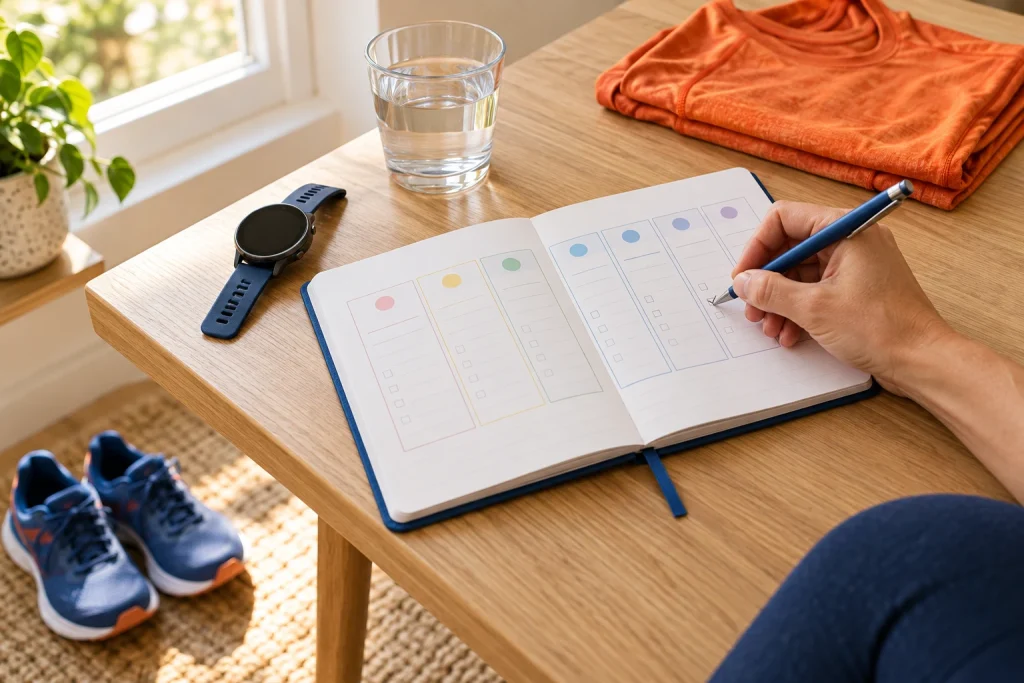
A new routine often starts with an optimistic calendar. There is a session before work, another at lunch and a long walk on Sunday. Then the commute runs late. A useful first week begins with the time that survives an ordinary day, including the small jobs around the activity itself. You do not need to earn a perfect timetable before you begin.
Count the whole appointment
Write down when you must leave and when you must be ready for the next commitment. Include changing, travel, equipment setup and returning home. A thirty-minute gym visit with fifteen minutes of travel each way needs a larger calendar block than a thirty-minute walk from your door. Those activities may both appeal to you, but their logistical costs are different.
For a fictional example, Sam has a forty-minute opening after work. The gym trip consumes thirty minutes before any activity begins. A nearby route leaves more of the opening available. This is a scheduling observation, not a reason that walking must replace the gym. Sam can reserve the gym for a day with more room and choose an activity already familiar to them for the shorter opening.
Make one dependable appointment
Pick a slot that has worked before. Attach it to something that already happens, such as finishing a work shift or returning from school drop-off. Record a start, an end and a place. “Tuesday after I get home” can move endlessly; “Tuesday, leave home at six and return before dinner” gives you something concrete to try.
Add a fallback that you would willingly use. It might be the same activity on a shorter route, or another familiar option indoors. The fallback should remove a logistical obstacle. It should not turn a missed appointment into a harder session or a punishment. When the day is unsuitable, leaving the slot unused is also an honest record.
Leave some of the week unassigned
An empty calendar square is useful space. It can hold a changed work shift, family plans or a rest day you want to keep. Filling every square makes the calendar fragile. Start with the appointments you can explain, then observe what actually happens before adding more.
The CDC describes weekly activity recommendations for adults and notes that some activity is better than none. Those population recommendations are context, not a personalized starting schedule. Choose activity that matches your abilities. If a health condition, injury or uncertainty affects what you can do, get advice appropriate to your circumstances before making a training plan.
Review the obstacle, not your character
At the end of the week, look at each appointment. Was the activity enjoyable? Did travel take longer than expected? Was equipment missing? Did the time conflict with something you could have predicted? These questions produce changes you can make. “I need more discipline” rarely tells you what to put in the calendar.
Keep the appointment that worked. Move one that repeatedly collided with another commitment. Remove any extra detail you never used. In the Training Week Planner, calendar blocks describe your own decisions; the app does not prescribe exercises or decide how much activity is suitable. Export the week if you want it beside your other appointments, and check the imported times before relying on reminders.
Open Training Week to organise your own inputs and keep an editable project.